Search this keyword

Tuesday, November 5, 2013

Helsinki on the Way to St. Petersburg

After saying goodbye to my shopping friend in Stockholm,

 we boarded a ship bound for Helsinki, Finland.

We floated out of the Swedish harbor past charming houses,
and lovely gardens which reached right to the shoreline,

passing numerous islands which buffered the ship from the waves of the open Baltic Sea. After enjoying the scenery for about three hours, we ate a Scandinavian smorgasbord before retiring. Our wake up call was shortly before we entered Helsinki harbor. 
The city feels closer to Russia than to Sweden. Historically, Finland was controlled by Sweden for nearly 600 years. During those years, the capital was on the west side of Finland, facing Sweden. In 1812, Russia defeated Sweden annexing Finland and moving its capital to Helsinki closer to Russia. A little over 100 years later, Finland declared its independence, but left its capital on the east coast.

Located only 190 miles west of St. Petersburg, Helsinki is a gateway to Russia. We were using it as a point of departure, so we were only in the city one day. To see the highlights, we took a city bus tour. 

For me, the most memorable building in Helsinki is the Rock Church. The exterior is impressive in its lack of beauty and certainly does not prepare the visitor for the interior. 

Inside, you can't help but be amazed at the sanctuary hewn out of bedrock. The architecturally pleasing slender windows encircling the space bring plenty of light into the grotto. 


When you look heavenward you are mesmerized by the texture of the copper wire ceiling.

The combination of rock and copper result in unbelievable acoustics. No wonder music students gladly perform in the underground cathedral daily over the noon hour.

Leaving the Rock Church, the bus stopped at Sibelius Park honoring the famous Finnish composer Jean Sibelius.

 In the heart of the park is a gargantuan steel sculpture of 600 hollow pipes welded together, an abstract expression which was to capture his music.


After the city tour, we took a taxi to the ship bound for St. Petersburg, our final destination. Although we could have omitted Helsinki from our itinerary, in retrospect, I am so glad we saw the city. Rock Church and the Sibelius Monument were certainly unforgettable. 


Thursday, October 31, 2013

A Curious George Birthday Party

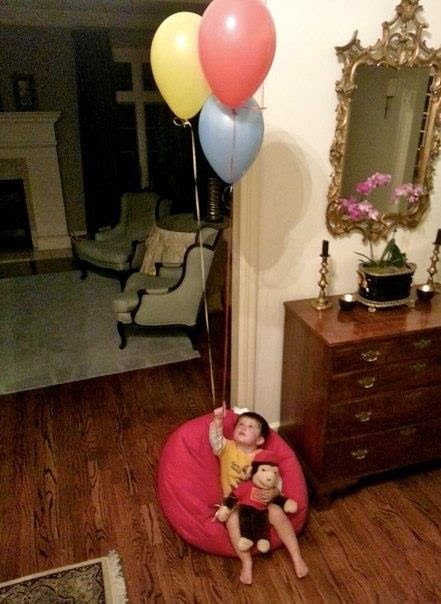
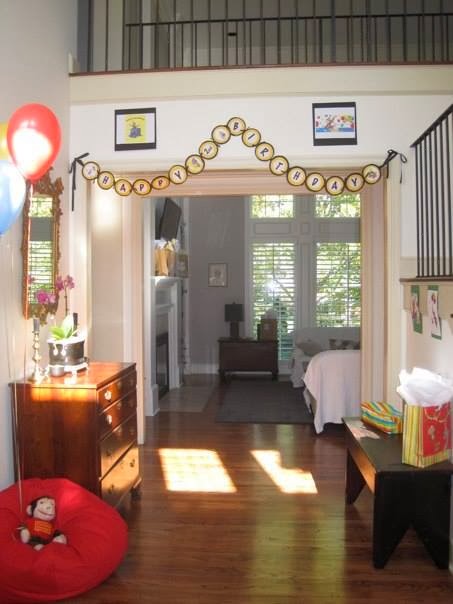
I'm taking a brief break from the travelogue to bring you pictures of the birthday party my youngest daughter gave for her two year old little boy. Curious George came to the party in all shapes and sizes.


The birthday boy turned two. To hear him tell it, he is "t-u-e-e-w."


 In addition to the birthday boy, big brother and adorable cousin loved the piƱata.


After they played another game of find Curious George, the whole clan had pizza and salad, and finished off the meal with this delicious cake baked and decorated by birthday-boy's Daddy!
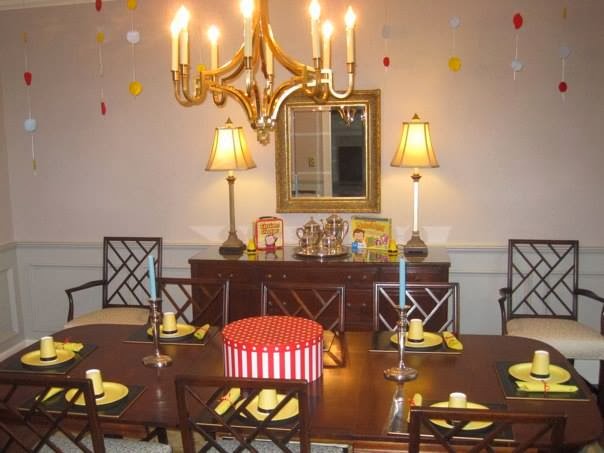
His mama decorated the house and the tables.


There were plenty of presents and a favor bag went home with each child.
 I hope you enjoyed seeing the creativity--spawned by Pinterest and two very clever parents.

Monday, October 21, 2013

Shopping Unique to Stockholm

Want a fresh window on the world?  Go shopping in a foreign country. Avoid the ubiquitous  international brand stores which look the same in any city, and instead seek out shops designed by creative individual entrepreneurs. Below are some examples of creative marketing and distinctive products I saw unique to Stockholm. 

Light bouncing off this glass menagerie in a jewelry store window caught the attention of many a passersby.  


This subtle rainbow spectrum in glass also tempted shoppers to purchase a goblet in every color.

If they hadn't been so delicate, I would have squirreled away some of these in my suitcase. Wouldn't they look fabulous in a bowl on a coffee table?

One modern Swedish design pioneer, Carl Mulmsten, opened his shop in 1940 not far from his grandfather's Grand Hotel. Mulmstenbutiken has been selling his handmade modern Scandinavian designs ever since. 

                                            
Mulmsten has an inspiring story. His father was a surgeon to the royal court and expected him to follow an academic pursuit.  Instead he forged his own path, creating modern Swedish furniture with his hands. He won acclaim in 1916, when he won the competition to build furniture for the new Stockholm City Hall. He went on to design for the Waldorf Astoria and the United Nations. Ironically, he eventually was named Honorary Professor of Design and Handicrafts.

Don't you love his chair shape?

His oval coffee table is also pleasing to the eye.

Down the street is another famous Scandinavian design house, Svenskt Tenn, which actually predated Mulmstenbutiken.

This shop was founded in 1924 by Estrid Ericson, the Swedish forerunner of Martha Stewart.


Ericson collaborated with well-known architect Josef Frank, combining her artistry with his design talent. Their enterprise was so successful that the shop is now owned by a foundation to foster scientific and medical research in Sweden as well as preserve the cultural values of Swedish home interior design. 

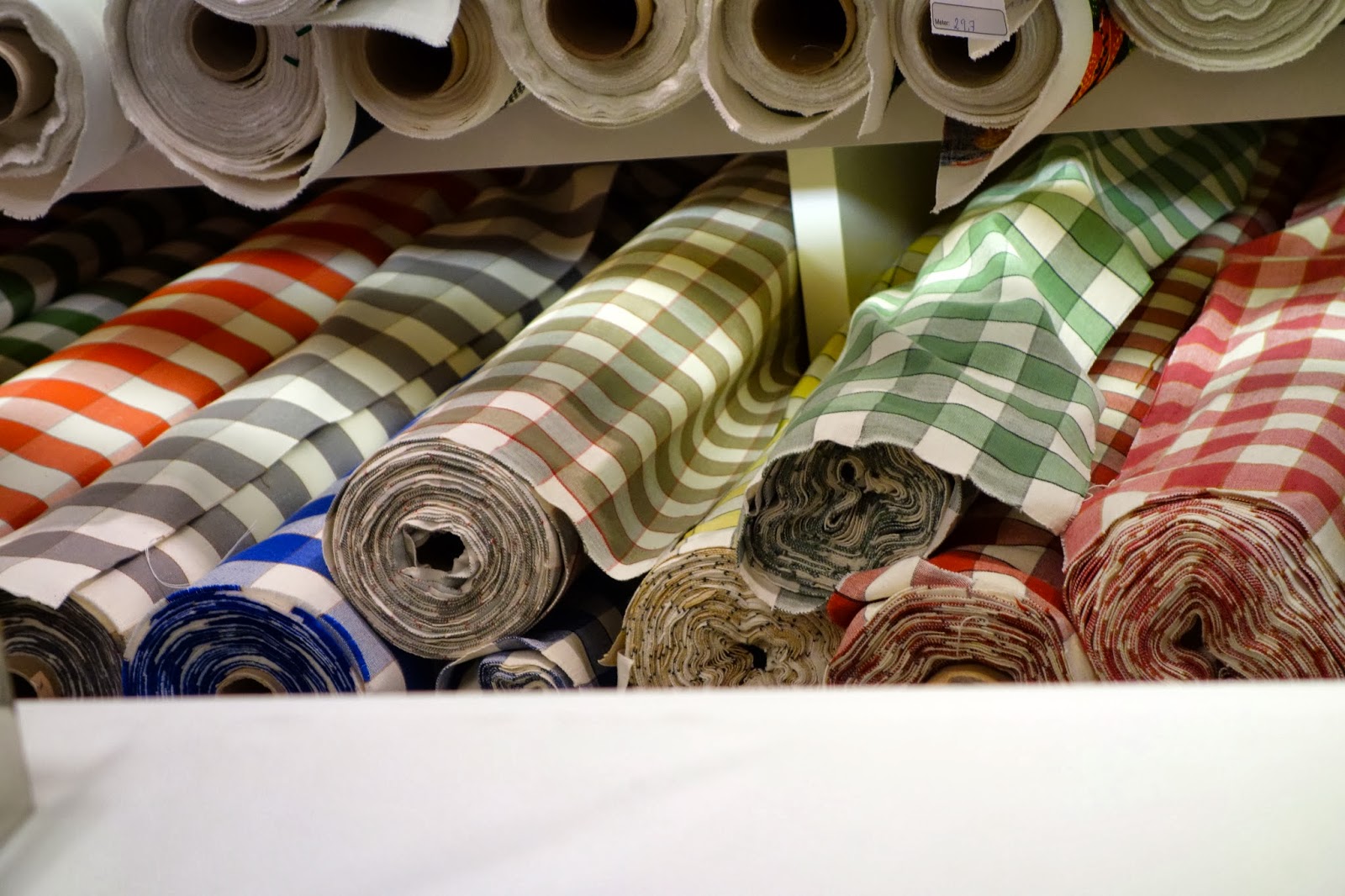
It is easy to see why the design business flourished. Fabrics in vivid colors,

                          
tableware, 


accessories,

and furniture


are displayed in cozy vignettes to help shoppers picture the merchandise in their own home.


The shop even includes a charming tea room so ladies can chat after they shop.


The combination of quality home goods, happy coloration, and pleasing designs would make a pleasant shopping experience anywhere in the world; this one is unique to Stockholm. (And I didn't buy a thing.)


Thursday, October 17, 2013

So Much to See in Stockholm

You would think after seeing Copenhagen and Oslo, Scandinavian capitals would all seem the same. Wrong! Like children, each capital city has its own unique personality. Stockholm is memorable for the front and center palace, the narrow streets in old town, the Nobel museum, and the immense Sweden-through-the-ages outdoor village. 

We started with a self-guided tour of the palace across the boulevard from the harbor.


The courtyard on the backside of the palace opens onto the cobbled streets of Gamla Stan, the historic section of the city.

A stone's throw from the palace courtyard, we visited the Nobel Museum which immortalizes the accomplishments of Nobel prizes winners in medicine, chemistry, physics, economics, and literature. The recipients are notified in the autumn, but the actual prizes are awarded each December 10th in Stockholm on Alfred Nobel's birthday, allowing the Nobel laureates afterward to present their speeches at the Nobel Peace Prize ceremony in Oslo, Norway.

Upon entering the small museum, visitors are greeted by circular glass panels through which tiny points of light shine. The glow symbolizes the illumination of the laureates' work on modern history.
Inside the museum hall, decades are laid out on panels tracing the one hundred years since Alfred Nobel's first prize was awarded. Viewed in this way, visitors can see how the work of each of these 700 creative geniuses has changed 20th century world history.


After leaving the Nobel Museum, we strolled through the picturesque medieval part of Stockholm, Gamla Stan.
We browsed in the numerous shops...


and took note of interesting restaurants for later in the evening.

Leaving Old Town we took a boat across the harbor to visit the Vasa Museum. Amazingly, this fascinating museum is dedicated to man's stupidity. The Vasa was a Swedish warship built, gilded, and outfitted with numerous canons amid hype in the 1600s. However, it was never tested until its maiden voyage. After the launch the boat floated just over 1,000 yards, foundered, and sank in front of throngs of people. Fifty three crew members lost their lives in the tragic accident. 
 In 1961, the ship was lifted from the sea after resting 333 years on the harbor floor. Seeing the boat in all its glory was impressive. Well, it looked good, even if it didn't float. (Does this remind you of something our government tried to float recently without a test-drive?)  

Just up the hill from the Vasa Museum is the Skansen Open-Air Museum where 150 buildings from all over Sweden have been dismantled and reassembled covering five centuries of Swedish history. Characters in period dress guide visitors.


To me living in historic Sweden looks appealing, until I tried to visualize living in one of these homes in the winter without central heat.   

After seeing the open air village, Bill and I were quite tired. We had seen a lot in one day. Now we needed some downtime. So, we trudged back to the hotel. After a brief rest, it wasn't easy to walk back to Gamla Stan for supper. But, we were hungry so we dragged ourselves over the cobblestones to the quaint restaurant our friends had recommended, and we had ferreted out in the morning. 


The restaurant is appropriately named Five Little Houses because it occupies five tiny, narrow, adjacent homes. I enjoyed lobster, while Bill tried reindeer. Both were yummy. But the best was the warm cloud berries with ice cream for dessert. 

What delightful ending to a special day of sightseeing in the unique city of Stockholm.